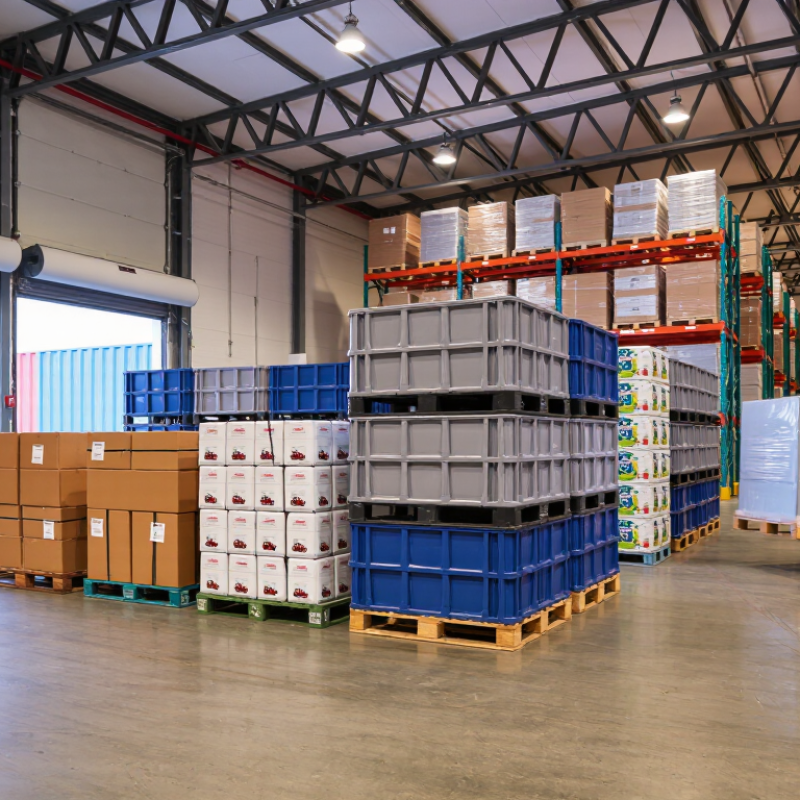
Choosing the best Sleeve Pallets for global shipping in 2026 requires more than comparing prices. A pallet may look efficient in a warehouse, yet fail during port handling, long-distance transport, or repeated loading. Exporters must examine sleeve strength, deck stability, moisture resistance, and compatibility with forklifts and pallet jacks. Small details matter. A damaged corner can weaken an entire unit.
This guide evaluates Sleeve Pallets through practical shipping conditions, not marketing claims alone. It considers common cargo sizes, container space, stacking pressure, warehouse turnover, and handling across different climates. A sleeve pallet carrying boxed machinery needs different protection from one carrying food-grade packaging or retail cartons. Verified dimensions, load ratings, material traceability, and supplier testing should support every purchasing decision. Certification may help, but it does not replace careful inspection.
Some recommendations will remain conditional. No pallet is perfect. A lightweight design can reduce freight costs, but it may offer less margin during rough handling. A stronger model can protect cargo better, while adding weight and storage expense. That trade-off deserves honest attention. Buyers should also confirm current import, packaging, and treatment requirements with qualified logistics professionals in each destination market. Standards and carrier policies can change.
The sections ahead compare practical options for international routes, including reusable, export-ready, and space-saving designs. They focus on evidence, field experience, and measurable performance. Results may differ by cargo and route. Testing a small shipment first is often wiser than committing to a full container.
A sleeve pallet combines a flat pallet base, a collapsible sleeve, and a top lid. The sleeve acts like a lightweight wall around the cargo. Workers place products inside, fold the sleeve edges, and secure the lid above them. Empty units collapse into compact stacks. That saves return space, although savings depend on the folding method and warehouse discipline.
The design protects cartons from shifting during forklift movement and ocean transport. It also allows loading from the top, which suits irregular or fragile products. ISO 6780 recognizes common pallet footprints, including 1,200 by 800 millimeters and 1,200 by 1,000 millimeters. Choosing the wrong footprint can leave dangerous gaps inside a container. Small gaps become large problems.
UNCTAD’s Review of Maritime Transport reports that more than 80% of global merchandise trade moves by sea. Sleeve pallets therefore need stable stacking, moisture control, and clear handling instructions. ISTA distribution testing can help evaluate vibration, compression, and impact risks before shipment. In practice, operators should test the full load, not only the empty sleeve. That detail is often missed. A damaged corner, uneven weight, or loose lid can reduce protection quickly. No pallet design removes every risk. Temperature changes, rough handling, and poor loading still demand human judgment.
Global shipping in 2026 demands sleeve pallets that balance strength, weight, moisture resistance, and destination rules. No material wins everywhere. Solid wood remains strong and repairable, but it may require heat treatment and official marking for international movement. It can also absorb rain during port storage. That detail matters. Recycled plastic offers consistent dimensions, easy cleaning, and better moisture resistance. However, heavier designs can increase freight costs, while damaged units may be harder to repair.
Composite pallets, made from pressed wood fibers or layered materials, provide a practical middle option. They are often lighter than solid wood and use fewer raw materials. Their performance depends on edge protection and compression strength. A wet warehouse can expose weaknesses quickly. Lightweight molded fiber may suit one-way shipments, especially when nesting reduces empty-return volume. Still, it may not tolerate long exposure to water or rough handling. This is where specifications can look better than reality.
Tips: Match the pallet to the route, not only the product. Test loaded units through stacking, vibration, humidity, and forklift contact. Check destination requirements before shipping. Measure pallet weight, repair options, and disposal methods. A small trial shipment can reveal problems that laboratory data misses. Also, avoid assuming recycled content automatically means lower environmental impact. Supplier distance, return logistics, and service life deserve equal attention.
Which sleeve pallet materials suit global shipping in 2026? The comparison below rates common materials against practical international-shipping requirements.
Ratings use a 1–10 scale based on moisture resistance, phytosanitary simplicity, durability, repairability, and recycling potential. Plastic and aluminum pallets generally avoid wood-packaging treatment requirements, while solid wood used in international trade commonly requires ISPM 15 treatment and marking.
When comparing sleeve pallet designs for global shipping, start with the cargo, not the advertised pallet rating. Record product weight, dimensions, center of gravity, and stacking pattern. Fit matters.
A 1200 × 800 mm pallet may suit European warehouse aisles, while a 1200 × 1000 mm format can improve stability for wider cartons. Measure the loaded footprint inside the target container. Leave enough clearance for forklifts and corner protection. Open four-way entry improves handling flexibility, but extra openings may reduce structural strength. A sleeve that folds flat saves return freight and storage space. Its locking points must still resist vibration during long ocean or road journeys.
Compare static, dynamic, and racking capacities separately. Static capacity describes a stationary load. Dynamic capacity reflects movement with a forklift or pallet truck. Racking capacity depends on support beams, deck design, and load distribution. Ask for test conditions, not one impressive number. A practical trial with your heaviest carton often reveals weak corners, sleeve bulging, or unstable stacking. I have seen a strong deck fail because the load sat three centimeters off-center. Numbers can mislead.
Check sleeve height, access, moisture resistance, repairability, and empty weight. Timber components may require destination-specific treatment and marking verification. Plastic components can handle moisture better, but temperature changes may affect stiffness. Request material specifications and independent test records. Then compare total shipping cost, not only purchase price. My early comparisons overlooked return logistics; that mistake made the cheapest option expensive.
International sleeve pallets must meet more than a carrier’s size and weight requirements. Their compliance depends on construction materials, shipment routes, and destination-country rules. When solid wood components are used, ISPM 15 requirements usually apply. Wood packaging must receive approved treatment and display a clear, permanent IPPC mark. The mark should remain visible after loading.
Inspect every edge.
A practical warehouse check includes the pallet runners, sleeve boards, fasteners, and repair areas. Untreated replacement wood can create customs delays, even when the original pallet carries a valid mark. A clean appearance proves little. Damaged or wet wood also deserves attention, because inspectors may question its condition and treatment status. Keep treatment records, supplier declarations, and packing photographs with the shipping file.
Plastic or composite sleeve pallets may fall outside ISPM 15, but they are not automatically compliant everywhere. Importers should verify material identification, recycling symbols, packaging-waste duties, and any food-contact requirements. Some markets also request documentation for recycled content or chemical composition. Rules can change during the shipping season. I would not rely on a general supplier statement alone. Confirm requirements with the destination customs authority, freight forwarder, and receiving warehouse before dispatch. A small compliance review can prevent repacking, storage charges, and rejected cargo.
| Evaluation Dimension | Common Sleeve-Pallet Option | Typical Technical Data | International Shipping Relevance | Applicable Standard or Rule | Compliance Status |
|---|---|---|---|---|---|
| Load-platform material | Plastic pallet with corrugated-plastic or paper-based sleeve | Moisture-resistant; reusable when the pallet and sleeve are designed for repeated handling | Useful for sea, air, road and rail transport where moisture exposure or repeated handling is expected | No single international regulation approves every plastic pallet design; performance must be supported by technical specifications and testing | ISPM 15 normally not applicable |
| Load-platform material | Solid-wood pallet with paper, plastic or composite sleeve | Commonly available in 1,200 × 800 mm and 1,200 × 1,000 mm footprints; actual load rating varies by design | Suitable for global freight only when the wood pallet meets the importing country’s wood-packaging requirements | ISPM 15 applies to regulated solid-wood packaging material, including many wood pallets and load boards | Treatment and mark usually required |
| Load-platform material | Engineered-wood pallet made from plywood, oriented strand board or fiberboard | Dimensional stability can be more consistent than untreated solid wood; structural capacity remains design-specific | May reduce phytosanitary processing requirements when the material falls within an ISPM 15 exemption | ISPM 15 exempts certain processed wood products, including plywood, oriented strand board and fiberboard | Confirm material and construction |
| Standard footprint | European-compatible footprint | 1,200 × 800 mm; nominal footprint area is 0.96 m² | Often compatible with European warehouse and transport systems, but it is not a universal legal requirement | ISO 6780 provides internationally recognized principal pallet dimensions and tolerances; market practice and customer requirements still control selection | Confirm destination and customer requirement |
| Standard footprint | North American-compatible footprint | 1,200 × 1,000 mm; nominal footprint area is 1.20 m² | Provides a common format for many international supply chains and can improve container and warehouse compatibility | ISO 6780 recognizes 1,200 × 1,000 mm as a principal pallet dimension; local handling systems may use other dimensions | Confirm route-specific compatibility |
| Sleeve construction | Collapsible corrugated-fiber sleeve | Typical sleeve heights are approximately 200–400 mm per sleeve; use multiple sleeves for taller loads | Low empty-return volume and lower tare weight can benefit air freight and reverse logistics | Packaging must remain suitable for the selected transport mode, climate, compression, vibration and handling conditions | Validate by packaging testing |
| Sleeve construction | Reusable plastic sleeve | Commonly selected for repeated cycles, humid environments and closed-loop distribution; exact cycle life is design-dependent | Suitable where cleaning, return logistics and consistent dimensions are available | There is no universal international sleeve-pallet certification; hygiene, recycling, waste and packaging rules may apply in the destination market | Assess local packaging obligations |
| Phytosanitary control | Any configuration containing regulated solid wood | Wood components must be treated and officially marked where ISPM 15 applies | Non-compliant wood packaging can be refused, detained, treated, destroyed or re-exported by an importing authority | ISPM 15 requires approved treatment and the official IPPC mark for covered wood packaging; national implementation may differ | Check before export |
| Phytosanitary control | Plastic, metal or qualifying processed-wood configuration | No solid-wood treatment mark is normally needed solely because the item is used as a pallet | Can simplify border clearance, but other customs, waste and product-specific requirements remain possible | ISPM 15 exemptions include non-wood packaging materials and certain processed wood products | ISPM 15 normally not applicable |
| Container loading | Any sleeve-pallet configuration packed into a freight container | Actual cargo weight must include products, pallet, sleeve, dunnage and securing materials | Incorrect declared weight can create safety, documentation and port-acceptance problems | Under SOLAS, the shipper must provide the verified gross mass of each packed container using an approved method | Required for ocean containers |
| Cargo securing | Stacked cartons or unit loads inside a sleeve pallet | Use blocking, bracing, anti-slip materials or strapping when needed; do not rely on the sleeve alone unless validated | Reduces shifting, crushing and instability during road, rail, sea and intermodal movement | The IMO/ILO/UNECE Code of Practice for Packing of Cargo Transport Units provides globally used guidance for safe packing and securing | Required by safe-loading practice |
| Stacking and compression | Loaded sleeve pallet in warehouse or container | Allowable load depends on pallet deck, sleeve strength, corner posts, product geometry, humidity and stacking pattern | Published nominal capacity is not transferable between designs; dynamic and static capacities should be separately assessed | Use documented packaging and distribution testing; ISO 8611 may be used for pallet performance testing, while transport-specific testing may also be needed | Test and document capacity |
| EU market packaging obligations | Packaging placed on the European Union market | Requirements may cover packaging minimization, recyclability, material information, waste management and extended producer responsibility | Applies to packaging compliance in addition to transport and phytosanitary rules | Regulation (EU) 2025/40 on packaging and packaging waste entered into force on 11 February 2025 and generally applies from 12 August 2026, subject to its transitional provisions | Check 2026 implementation duties |
| Marking and documentation | Export sleeve pallet with mixed materials | Record dimensions, tare weight, gross weight, material composition, treatment marks and handling instructions | Consistent records support customs, carrier booking, warehouse receipt and compliance reviews | Documentation requirements depend on the importing country, carrier, commodity and transport mode; no single universal document covers every shipment | Maintain shipment records |
| Best selection for high-humidity ocean freight | Plastic pallet with moisture-resistant reusable sleeve | Lower moisture sensitivity than untreated fiber packaging; verify drainage, friction and load stability | Often preferable for long dwell times, condensation risk and repeated port handling | Must still comply with SOLAS VGM, cargo-securing practice, destination packaging rules and any product-specific regulations | Best when moisture risk is high |
| Best selection for air freight | Lightweight plastic or fiber sleeve pallet with compact collapsed return design | Lower tare weight can improve chargeable-weight efficiency; confirm airline, handling-agent and ULD interface requirements | Useful when dimensional weight and manual handling are major cost or safety factors | Air cargo remains subject to carrier rules, dangerous-goods requirements where applicable, and secure packing requirements | Optimize for weight and handling |
Choosing the best sleeve pallet begins with your cargo, not a product catalog.
Measure the goods, including protective wrapping and corner guards. The sleeve should fit closely without crushing the load. Excess space allows movement, while a tight fit can damage cartons.
I learned this after selecting a pallet that was strong but unnecessarily heavy. It increased handling effort and freight costs. Check the pallet’s dynamic, static, and racking load ratings. Confirm fork-entry clearance and stacking height with your warehouse team.
For humid routes, consider moisture-resistant materials, liners, and ventilation. A dry warehouse test can mislead.
Sleeve material also affects performance. Corrugated sleeves are lightweight and recyclable, while plywood or plastic options may provide better durability. If wooden components are used, verify applicable treatment and marking requirements before export. Packaging rules can vary by destination and transport method. Ask for test data, not only stated capacity. Inspect samples for crushed edges, weak seams, and difficult folding. Return logistics matter too. Reusable sleeves need a realistic recovery plan, or they may become expensive waste. My own choice would still change after seeing real loading conditions, especially where forklifts operate quickly and floors are uneven.
Call 815-281-5297 now to speak directly with an Algus expert or fill out the form below.