
What Is the Best Aluminium Melting Furnace from China?
Choosing the best aluminium melting furnace from China requires more than comparing prices or catalogue photographs. The right furnace must match your alloy, production volume, fuel source, and workshop conditions. A small foundry may need a compact tilting unit for 100–300 kilograms per batch. A larger plant may require an industrial furnace with automatic temperature control and continuous charging. These differences matter.
Real operating details often reveal more than impressive specifications. Ask about melting time, energy consumption, crucible life, lining materials, and temperature accuracy. For aluminium, stable heat is essential because overheating can increase oxidation, metal loss, and casting defects. A reliable aluminium melting furnace should also include practical safety features, such as insulated doors, emergency shutoffs, clear control panels, and protected hydraulic systems. Check the furnace in operation, if possible. Video evidence helps, but an independent inspection is stronger.
There is no single best Chinese furnace for every buyer. That point is easy to overlook. Established manufacturers may provide better engineering support, spare parts, and installation guidance, while smaller suppliers may offer greater customization. However, customization is not automatically an advantage. Poorly documented changes can create maintenance problems later. Review certifications, factory experience, customer references, warranty terms, and after-sales response times before making a decision. A careful supplier should explain limitations honestly, not only promote maximum capacity. The final choice should balance performance, safety, total ownership cost, and dependable technical support. Some specifications may look attractive on paper, yet actual results can vary with operator skill, alloy type, and local power conditions.
Types of Aluminium Melting Furnaces Manufactured in China
What Is the Best Aluminium Melting Furnace from China?
Types of Aluminium Melting Furnaces Manufactured in China
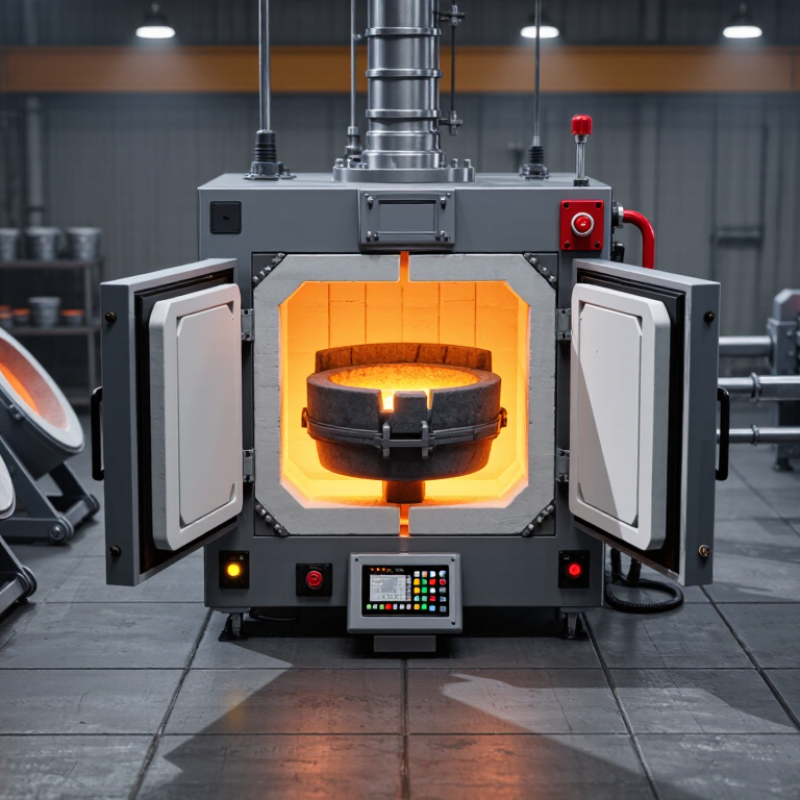
China-made aluminium melting furnaces cover several practical designs. Crucible furnaces suit small foundries and changing alloy schedules. A steel shell surrounds a ceramic or graphite crucible. Operators can lift it for pouring. Gas-fired and electric versions are common. They are compact, but their capacity remains limited. Heat can also vary near the crucible wall. That matters when alloy chemistry must stay consistent.
Reverberatory furnaces serve larger, continuous batches. Burners heat a refractory chamber above the metal surface. Their broad hearth supports easier charging and skimming. Rotary furnaces tilt for charging, melting, and dross removal. They often handle recycled returns more effectively. However, refractory wear deserves close inspection. A thin, damaged lining can increase heat loss and metal contamination.
Induction furnaces provide rapid heating and accurate temperature control. They need stable electrical capacity and disciplined coil maintenance. Resistance furnaces offer cleaner operation for smaller, controlled melts. Chinese manufacturers may add thermocouples, PLC controls, weighing systems, and data logging. Do not judge a furnace by rated tonnes alone. Check melt rate, energy consumption, lining life, exhaust design, and repair access. A common mistake is selecting maximum capacity for occasional peaks. That choice can leave metal waiting and waste energy. Ask for test records, material certificates, and a witnessed trial. Some specifications look convincing, yet operator training remains uneven. Plan for that weakness.
| Furnace Type | Typical Heating Method | Common Capacity Range | Typical Operating Temperature | Typical Melting Time* | Main Advantages | Best-Suited Applications | Key Selection Considerations |
|---|---|---|---|---|---|---|---|
| Electric Resistance Melting Furnace | Electric resistance heating elements transfer heat through the chamber and crucible. | Approximately 50–1,000 kg per batch | Usually 700–800°C for aluminium melting; higher design temperatures may be available. | Approximately 1.5–4 hours, depending on charge size, alloy, and starting temperature. | Clean operation Stable temperature control Suitable for smaller and medium production volumes Straightforward installation | Laboratories, maintenance shops, die-casting lines, small foundries, and plants with lower to medium melt demand. | Electrical power availability, element life, insulation quality, crucible material, and temperature-control accuracy. |
| Gas-Fired Crucible Furnace | Natural gas or liquefied petroleum gas burns around a removable or fixed crucible. | Approximately 100–1,500 kg per batch | Normally controlled around 700–850°C for aluminium alloys. | Approximately 1–3 hours, depending on burner output and charge preparation. | Fast heating Flexible fuel options Suitable for intermittent production Lower dependence on high-capacity electrical service | General-purpose foundries, metal-recycling operations, job shops, and areas with economical gas supply. | Fuel cost, ventilation, combustion safety, burner control, refractory durability, and local emissions requirements. |
| Gas-Fired Reverberatory Furnace | Burners heat the roof and walls; radiant heat is reflected onto the aluminium bath. | Approximately 500–10,000 kg or more per batch | Typically 700–850°C, with separate control for melting and holding zones. | Approximately 1–4 hours, based on furnace size, burner capacity, and charge density. | Large batch capacity Suitable for continuous or semi-continuous operation Can accept a broad range of charge materials | High-volume casting, aluminium recycling, secondary aluminium production, and large foundries. | Floor space, fuel consumption, oxidation and dross generation, bath depth, refractory design, and charging system. |
| Induction Melting Furnace | An electromagnetic field induces current in the metal, producing internal heating. | Approximately 50–2,000 kg per batch for common foundry configurations | Usually operated near 700–850°C for aluminium, with precise set-point control. | Approximately 30–120 minutes, depending on power density and charge condition. | Rapid melting Good temperature uniformity No direct combustion gases Accurate process control | Foundries requiring flexible alloy changes, controlled melting, high productivity, or reduced direct combustion exposure. | Electrical infrastructure, power-factor equipment, coil and lining maintenance, electromagnetic stirring, and operator training. |
| Electric Resistance Holding Furnace | Electric heating elements maintain molten aluminium in an insulated holding chamber. | Approximately 100–2,000 kg holding capacity | Commonly maintained around 680–760°C, according to alloy and casting process. | Not primarily designed for rapid melting; holding and temperature recovery are the main functions. | Stable holding temperature Reduced heat loss during casting Well suited to automated transfer or dosing | Die casting, low-pressure casting, gravity casting, and production lines requiring a continuous molten-metal supply. | Insulation performance, temperature uniformity, automatic level control, transfer method, and compatibility with the casting machine. |
| Electric Tilting Crucible Furnace | Electric resistance elements heat a crucible that tilts hydraulically or mechanically for controlled pouring. | Approximately 100–1,000 kg per batch | Typically 700–850°C, depending on alloy and pouring requirements. | Approximately 1–3 hours, depending on rated power and charge size. | Controlled pouring Reduced manual ladling Good batch flexibility Suitable for clean, repeatable casting operations | Gravity casting, sand casting, permanent-mould casting, and operations needing safer or more consistent metal transfer. | Tilting mechanism reliability, pouring angle, crucible replacement, load distribution, control-system integration, and safety interlocks. |
| Electric Tower or Shaft Melting Furnace | Preheated aluminium charge is fed through a vertical shaft into a melting and holding zone. | Approximately 500–5,000 kg/h melting output | Melting and holding zones are commonly controlled within approximately 700–850°C. | Continuous operation; output depends on installed power, charge form, and thermal recovery. | Continuous production Efficient use of preheated charge Reduced manual charging Suitable for integration with casting lines | Medium- and high-volume die-casting or casting plants requiring a steady supply of molten aluminium. | Charge preparation, feeding consistency, automatic controls, dross management, maintenance access, and line-layout requirements. |
*Melting times and capacities are indicative engineering ranges rather than guaranteed performance values. Actual results vary with furnace design, rated power, alloy composition, ingot or scrap condition, charge size, insulation, operating temperature, and local utility conditions. Aluminium alloys generally melt within approximately 570–660°C, but furnaces are operated at higher temperatures to allow for superheat, transfer, and casting requirements.