7 Best Three Part Carbonless Paper Manufacturers Worldwide

Choosing the right Three Part Carbonless Paper manufacturer requires more than comparing prices. It requires examining coating uniformity, sheet registration, print clarity, packaging quality, and delivery reliability. These factors become visible when a three-copy form is handled at a busy warehouse counter. The top sheet must transfer cleanly. The middle sheet cannot appear faint. The bottom copy should remain readable after filing.

Industry data provides useful context, although it does not create a perfect ranking. Smithers’ The Future of Global Printing to 2028 describes continued pressure from digital workflows, while confirming that printed documents remain important in transactional and commercial applications. CEPI’s 2023 Key Statistics also shows the continuing scale of Europe’s paper industry and its investment in production efficiency and sustainability. These broader reports do not measure every carbonless paper producer directly. That limitation matters.

Quality standards offer another practical reference. ISO 9001 certification can indicate controlled production processes, but it does not guarantee excellent copy performance. Responsible buyers should request GSM specifications, coating details, sample forms, and test results before signing a contract. FSC certification may also support responsible sourcing decisions, where applicable.

Small details matter.

This guide reviews seven leading manufacturers worldwide. The evaluation considers product consistency, manufacturing experience, customization, environmental practices, export capability, and customer support. Some companies may excel in high-volume orders, while others suit specialized forms or regional distribution. No manufacturer fits every market. Buyers should verify current certificates, production capacity, and technical claims independently, because published information can change.
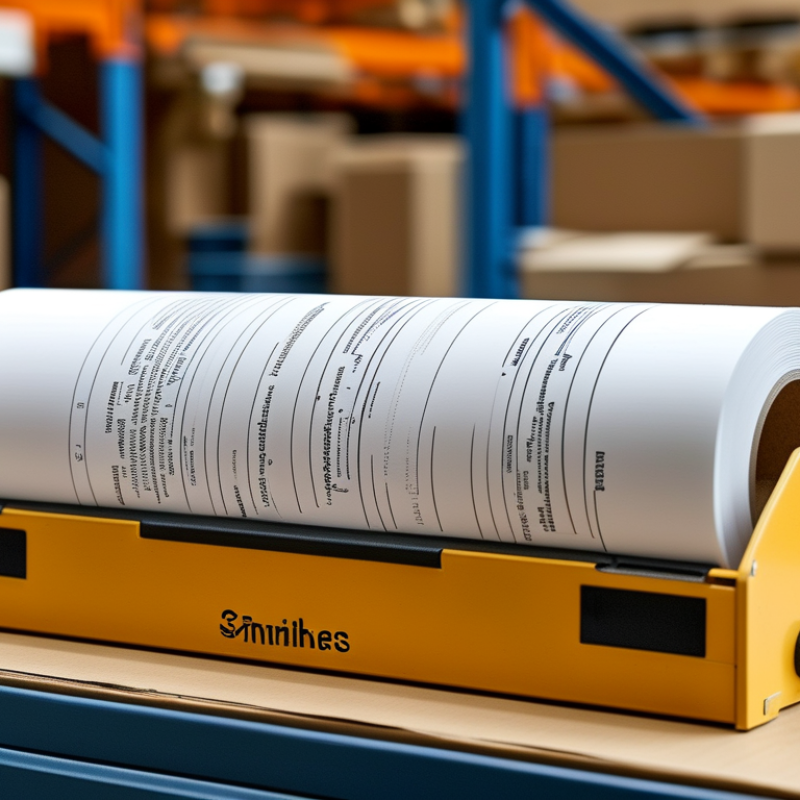
7 Best Three Part Carbonless Paper Manufacturers Worldwide

Three-Part Carbonless Paper: CB, CFB, and CF Layer Functions

Three-Part Carbonless Paper: CB, CFB, and CF Layer Functions

Three-part carbonless paper records handwriting without carbon sheets or liquid ink. Its performance depends on the coordinated action of CB, CFB, and CF layers. In practical printing tests, the top CB sheet carries microcapsules on its underside. Pressure from a pen or printer activates these capsules and releases a color-forming solution.

The middle CFB sheet has a coated front and a coated back. Its front receives the image, while its back transfers pressure-sensitive chemicals to the next sheet. This dual function makes CFB the working center of the set. The bottom CF sheet contains a reactive coating on its upper surface. It develops the final visible copy when pressure reaches it. Weak coating balance can cause pale text, uneven transfer, or unwanted background marks.

Tips: Match the paper weight to the form design. Test ballpoint pressure, printer heat, storage humidity, and stacking direction before production. Keep the sheets flat and protected from excessive heat. In my experience, a small trial run often reveals problems that specifications miss. Do not judge quality from whiteness alone. Image density, smooth feeding, clean separation, and long-term readability matter more. Some forms still need adjustment after testing, which is normal and worth documenting. A reliable manufacturer should provide coating data, sample sheets, and consistent batch inspection.

Industry Specifications: 55–60 gsm Sheets and 3–5 Copy Form Capacity

Three-part carbonless paper is commonly specified for invoices, delivery notes, and service records. A credible manufacturer should offer consistent 55–60 gsm sheets across the full form set. This range keeps documents light while preserving enough strength for handling, filing, and transport. Thinner stock may reduce cost, but it can feel weak under repeated writing.

The copy capacity matters just as much. A three-copy form usually contains a top sheet, one intermediate sheet, and a bottom sheet. Some production lines support four or five copies, but image clarity can decline as layers increase. Good manufacturers test writing pressure, coating uniformity, color transfer, and sheet alignment during production. Clear impressions should appear on every copy, even near the page edges.

Storage conditions deserve attention. Excessive humidity may cause sheets to curl, while dry air can affect feeding and separation. In practical purchasing, I would request samples before approving a large order. Ask for gsm reports, copy-performance data, and batch inspection records. I would not treat gsm alone as proof of quality. A 60 gsm sheet can still perform poorly when coatings are uneven or padding pressure is inconsistent. Small defects matter. They become obvious during fast office use.

7 Best Three Part Carbonless Paper Manufacturers Worldwide - Industry Specifications: 55–60 gsm Sheets and 3–5 Copy Form Capacity

Benchmark Position Anonymous Manufacturer Profile Paper Basis Weight Standard Form Capacity Common Sheet Formats Copy Set Structure Printing Compatibility Typical Applications Quality-Control Focus
1 High-volume sheet-form specialist 55–60 gsm 3–5 copies A4, A5, Letter, Legal CB + CFB + CF Offset, laser, inkjet Invoices, delivery notes, purchase orders Even coating, reliable image transfer, low curl
2 Continuous-form production specialist 55–60 gsm 3–5 copies 9.5 × 11 in, 9.5 × 12 in, custom CB + CFB + CF Impact and web offset Warehouse records, logistics forms, statements Precise sprocket holes, fan-fold accuracy, dust control
3 Custom-color form manufacturer 55–60 gsm 3–5 copies A4, A5, Letter, custom CB + CFB + CF Offset and digital production Service reports, inspection forms, claim documents Color consistency, readable duplicate copies, registration
4 Carbonless roll and sheet converter 55–60 gsm 3–4 copies A4, Letter, roll stock, custom CB + CFB + CF Web offset and impact Receipts, tickets, dispatch documentation Roll tension, edge quality, coating uniformity
5 Short-run customized form specialist 55–60 gsm 3–5 copies A4, A5, Letter, half-sheet CB + CFB + CF Offset and toner-based digital Work orders, acknowledgements, internal records Small-batch consistency, cut accuracy, print adhesion
6 Export-oriented business-form producer 55–60 gsm 3–5 copies A4, A5, Letter, Legal CB + CFB + CF Offset, impact, selected digital systems International trade documents, bills of lading, order forms Moisture protection, carton strength, batch traceability
7 General-purpose office-form manufacturer 55–60 gsm 3–5 copies A4, A5, Letter CB + CFB + CF Offset and impact Receipts, quotations, contracts, office records Smooth feeding, image density, sheet flatness
Industry specification note: CB denotes the coated-back top sheet, CFB denotes the coated-front and coated-back middle sheet, and CF denotes the coated-front bottom sheet. A three-part form normally uses CB + CFB + CF, while four- and five-part forms add additional CFB sheets.

Selection Criteria: Coating Quality, GSM Consistency, and Copy Legibility

7 Best Three Part Carbonless Paper Manufacturers Worldwide

Selecting a three-part carbonless paper manufacturer requires more than comparing prices. Coating quality controls how reliably pressure transfers writing between sheets. Smithers’ The Future of Carbonless Paper to 2028 links product performance with coating technology, converting accuracy, and application requirements. In practical testing, a firm pen should create a clean duplicate without scratching the top sheet. The middle copy should remain readable at normal office lighting. Weak coating often produces pale characters, uneven patches, or delayed image development. That delay matters during invoice handling.

GSM consistency deserves a measurable check. ISO 536 defines the standard method for paper grammage testing. For procurement, I would sample at least ten sheets from different cartons and compare the results. A target variation near ±3% is a useful internal benchmark, though it is not a universal legal requirement. A 55 GSM sheet can feel noticeably different when some areas fall below specification. Poor caliper control may also cause feeding problems in printers and forms equipment. Small differences become expensive at volume.

Copy legibility should be assessed after storage, not only immediately after printing. Industry forecasts from Grand View Research and Smithers show continued demand for carbonless forms in logistics, administration, and transaction records. These uses require stable images, not merely attractive samples. Test sets should be stacked, folded, and reviewed after 24 hours. I would also compare black and blue writing pressure. My judgment is not perfect; humidity, pen type, and storage temperature can distort results. A manufacturer that shares coating data, GSM records, and batch samples earns more confidence than one offering only a polished brochure.

Global Manufacturer Shortlist: Seven Suppliers Across Three Major Regions

This shortlist examines seven three-part carbonless paper manufacturers across three major regions: Asia, Europe, and North America. The selection focuses on coating consistency, sheet conversion, production capacity, and technical support. These factors matter when forms must produce clear duplicate copies without excessive pressure.

Asia contributes three suppliers with strong high-volume capabilities. One focuses on standard CB, CFB, and CF grades for continuous forms. Another provides custom calipers and moisture-resistant packaging for humid shipping routes. The third supports roll and sheet formats, with inspection checks for coating uniformity and print performance. Buyers should request recent test sheets. Paper quality can vary between production batches.

Europe adds two manufacturers known for controlled production systems and specialized applications. One offers tight basis-weight control for invoice and logistics forms. The other emphasizes recyclable packaging and traceable raw materials. These features improve procurement confidence, although environmental claims still require independent verification. I would not rely on a brochure alone.

North America completes the shortlist with two suppliers serving commercial printers and business-form converters. One provides short-run flexibility and custom sheet sizes. The other concentrates on large-volume orders, dependable carton labeling, and technical guidance for offset printing. Ask about storage conditions, minimum order quantities, and complaint handling before signing a contract. Small details matter. A supplier may meet the specification yet struggle with delivery pressure. This shortlist is useful, but not final. Actual samples, factory audits, and reference checks should shape the decision.

Comparing Sustainability: Recycled Content, BPA Status, and ISO 14001 Certification

When comparing the seven best three-part carbonless paper manufacturers worldwide, sustainability should go beyond green claims. Recycled content is a useful starting point. Ask whether the percentage applies to the full sheet or only the backing layer. A verified product specification should state post-consumer and pre-consumer content separately. The difference matters.

BPA status also deserves careful review. “BPA-free” should be supported by a current declaration or independent test report. Carbonless coatings may use alternative color developers, but “alternative” does not automatically mean safer or more sustainable. Request testing details, production dates, and the substances covered. Evidence matters.

ISO 14001 certification can strengthen confidence in environmental management. However, certification usually covers a site or management system, not every product. Check the certificate scope, expiration date, and manufacturing location. That small detail is often missed.

Tips: Build a simple comparison sheet with four columns: recycled content, BPA documentation, ISO 14001 scope, and evidence date. Give more weight to traceable records than attractive packaging.

Also check fiber performance. High recycled content can sometimes affect stiffness, print sharpness, or sheet feeding. That trade-off is real. A lower percentage may perform better in demanding forms, though this should not excuse weak environmental reporting.

I would also review supplier responses twice. Clear answers are valuable, but vague wording may reveal gaps that deserve further questioning.

Click to access the login or register cheese
Scroll to Top

Request a Quote

Call 815-281-5297 now to speak directly with an Algus expert or fill out the form below.