How to Choose a Blister Pack Heat Sealer?
Choosing a blister pack heat sealer is not simply a matter of comparing prices. The machine must match the blister material, lidding film, product shape, and expected production volume. A small mismatch can create weak seals, cloudy cavities, damaged medication trays, or unnecessary material waste. The right choice begins with the package, not the machine brochure.
Packaging engineer John R. Henry offers a practical reminder: “A sealer should protect the product before it impresses the buyer.” That principle keeps attention on sealing temperature, pressure, dwell time, and tooling accuracy. These settings work together. Excessive heat may warp PVC or blister cavities. Insufficient pressure can leave channels along the seal edge. A reliable blister pack heat sealer should also provide stable temperature control, repeatable pressure, clear adjustment controls, and accessible maintenance points.
Production speed matters, but it should not dominate the decision. A high-output machine may perform poorly with delicate films or frequent format changes. Consider changeover time, spare-part availability, operator training, and quality inspection procedures. Ask suppliers for sample trials using your actual blister and lidding materials. Watch the seal peel, inspect the edges, and test packages after handling.
There is no perfect machine.
Even experienced teams sometimes select equipment too quickly. They focus on cycle speed and overlook tooling costs, floor space, or future packaging changes. A careful evaluation accepts that uncertainty. It compares real samples, records test conditions, and leaves room for improvement. This approach makes the final purchase more defensible, practical, and dependable.
What Is a Blister Pack Heat Sealer?
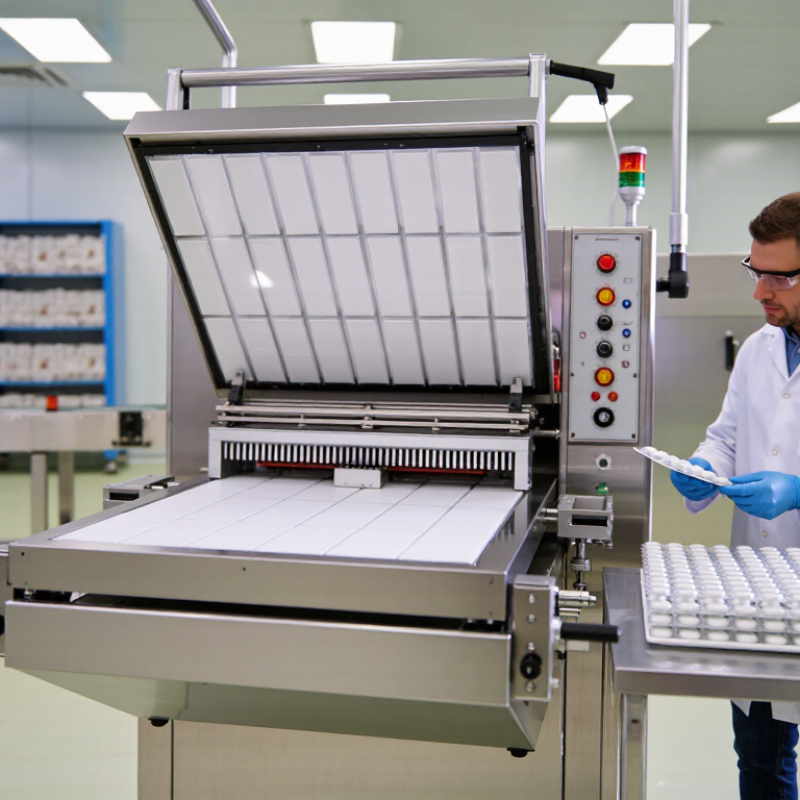
A blister pack heat sealer is a machine that bonds a formed plastic cavity to coated paperboard or foil backing. It uses controlled heat, pressure, and dwell time. A heated platen softens the sealing layer. Pressure then closes the bond. When the tool opens, the package should have a clean, continuous seal. That sounds simple, but material compatibility matters.
For choosing one, identify the pack structure first. PVC, PET, and foil-laminated films may require different sealing temperatures. Check the recommended range from the packaging-material supplier, not just the machine display. A useful machine should hold temperature steadily across the platen. Uneven heat may create weak corners or scorch the card. Inspect pressure adjustment, timer accuracy, tool changeover, guarding, and cleaning access. These details affect repeatability during real production.
Run sample packs before purchasing. Look for a uniform seal, easy opening, and no crushed cavities. Measure results across the first, middle, and last packs. Record temperature, pressure, and dwell time. Small records reveal drift. Do not judge only by speed. A compact sealer may suit low-volume work, while an automated unit needs stable feeding and maintenance support. Operator training is often underestimated. A capable machine can still produce inconsistent packs when setup instructions are vague. That weakness deserves honest review.
Which Packaging Materials and Pack Types Must It Handle?
Choosing a blister pack heat sealer starts with the material stack, not the machine’s advertised speed.
A 2024 Grand View Research report estimates the global blister packaging market at about USD 26 billion, with continued growth through 2030. That scale increases pressure on seal quality and material flexibility.
The sealer should handle PVC, PET, PP, or aluminum-based forming webs, plus coated lidding foil. Each combination needs a compatible heat-seal coating. PVC may seal at lower temperatures, while PP often needs higher heat and tighter control. Cold-form aluminum packs require different pressure and dwell settings from thermoformed plastic blisters. Small differences matter.
Check the pack types.
A practical machine should support unit-dose, wallet, calendar, and multi-cavity blister formats. It should also manage peelable, push-through, and child-resistant lidding structures when specified. PMMI’s 2024 pharmaceutical packaging report identifies format flexibility and material sustainability as continuing equipment priorities. However, “sustainable” materials are not automatically easier to seal. Some mono-material films have narrower operating windows.
I would test the exact production laminate before buying. A seal can look clean but open during transport. Weak seals often appear only after humidity exposure or stacking.
Measure seal strength, temperature stability, dwell time, and pressure across every cavity. Do not rely on one successful sample. That would be careless.
Include recycled-content or thinner films in trials, but accept that their behavior may be inconsistent. A reliable heat sealer should record settings, detect seal faults, and allow quick tooling changes without damaging delicate foil or forming webs.
How to Match Sealer Design with Production Requirements?
Choosing a blister pack heat sealer begins with production requirements, not machine appearance. A compact tabletop sealer may suit clinical trial batches or seasonal products. Continuous production needs stronger frames, automated feeding, and stable temperature control. Match the sealing area to your largest planned blister, not only today’s format.
I have seen teams select high speed equipment, then struggle with frequent tooling changes. Ask how often materials, cavity sizes, and pack dimensions will change. Quick-change tooling can reduce downtime, but it may need skilled operators. Check the machine’s working range for forming films, lidding foils, and sensitive contents. Seal pressure should remain even across the entire tray. Uneven pressure often creates weak corners or wrinkled foil.
Temperature control deserves close attention. A narrow adjustment range can damage heat-sensitive materials. A wider range gives operators more room for process trials. Record sealing temperature, dwell time, pressure, and cooling results during testing. Do not rely on one successful sample. Production rooms vary in humidity and temperature. They affect repeatability. Safety guards, cleaning access, and spare heating elements also influence daily reliability. One detail is easy to miss: the best design may not be the fastest. It may be the one operators can set correctly every shift. Recheck your assumptions after a real production trial.
How to Choose a Blister Pack Heat Sealer?
Match the sealer design to the required production rate. Manual platen sealers suit pilot work and small batches, semi-automatic systems support regular low-volume production, and automatic or continuous systems are better for higher output. The cycle time is calculated as 3,600 ÷ packs per hour, assuming one pack is sealed per cycle.
Which Heating, Pressure, and Temperature Controls Matter?
How to Choose a Blister Pack Heat Sealer?
Heating, pressure, and temperature controls determine whether a blister pack seals cleanly or fails later. Start with material compatibility. PVC, PET, and coated cards can require different heat ranges and dwell times. A reliable sealer should provide stable temperature control, not merely a high maximum temperature. Watch for even heating across the plate. Cold edges often reveal poor heat distribution.
Pressure matters just as much. Too little pressure can leave channels, while excessive pressure may crush the blister or distort the card. Choose a machine with adjustable pressure and, ideally, a visible pressure gauge. Dwell time also deserves attention. In practical testing, a slightly longer dwell can improve bonding, but excessive exposure may damage sensitive materials. My first setting was often too hot. Real production conditions changed the result.
Tips: Test several temperature, pressure, and dwell-time combinations using the actual packaging materials. Check seal width, peel strength, wrinkles, and incomplete bonding. Let samples cool before inspection. Record every setting. A small temperature drift can matter. Operators should also verify calibration regularly, because a display reading is not always the true plate temperature. Do not rely on one successful sample; repeat testing across different batches and document any inconsistent seals.
How to Compare Safety, Maintenance, and Total Operating Costs?
How to Choose a Blister Pack Heat Sealer?
A reliable heat sealer should protect operators before it protects production targets. Look for guarded hot surfaces, emergency stops, stable temperature controls, and clear alarm signals. These features reduce burns, incorrect settings, and rushed interventions. Ask whether operators can load materials without reaching across heated areas. Small design details matter during long shifts.
Maintenance affects the real purchase price. Inspect the sealing plate, sensors, wiring, and pressure system before approval. Components should be accessible without dismantling half the machine. I have seen a low-cost unit become expensive after repeated heater failures and long service delays. Check cleaning procedures, spare-part availability, calibration requirements, and expected service intervals. Record every adjustment. Guesswork creates inconsistent seals.
Tips: Compare total operating cost, not only the quotation. Estimate energy use, tooling replacement, labor hours, rejected packs, and planned downtime. Request a sample run using your actual materials. Measure seal strength, cycle time, surface temperature, and noise. Ask trained maintenance staff to perform a mock inspection. Their feedback may reveal problems that brochures hide. Leave room for uncertainty; early estimates are rarely perfect. A slightly slower machine can cost less when it reduces waste and emergency repairs. Safety evidence should include manuals, risk assessments, and operator training records. If the supplier cannot explain these clearly, pause the decision. Reliability is proven through records, not confident promises.